The Milankovitch Cycles: How Earth's Orbit Paces the Ice Ages
Earth's orbit and its tilt are not fixed. They flex and wobble over tens of thousands of years, and those slow changes alter how much summer sunlight falls on the far north, where the great ice sheets grow and melt. Drag the slider to watch the three rhythms beat together across the last ice ages.
On this page
The Milankovitch cycles are three slow changes in Earth's orbit and tilt that together pace the ice ages: the eccentricity of the orbit (about 100,000 and 405,000 years), the tilt of the axis between 22.1 and 24.5 degrees (about 41,000 years), and the precession that sets which season falls nearest the Sun (about 19,000 to 23,000 years). They work by changing the summer sunlight reaching the high northern latitudes, where ice sheets build and retreat.
A simplified model of the three dominant rhythms, using their real periods, ranges and present-day values, so the beat pattern and where we are now are faithful. The full orbital history (Laskar 2004) is richer, and the sunlight track is shown in relative units, not watts. No forecast of future climate is made or implied.
Three slow wobbles
Three separate motions, each on its own clock, combine to set the climate's slow heartbeat. The interactive above shows them as faithful rhythms; here is what each one is.
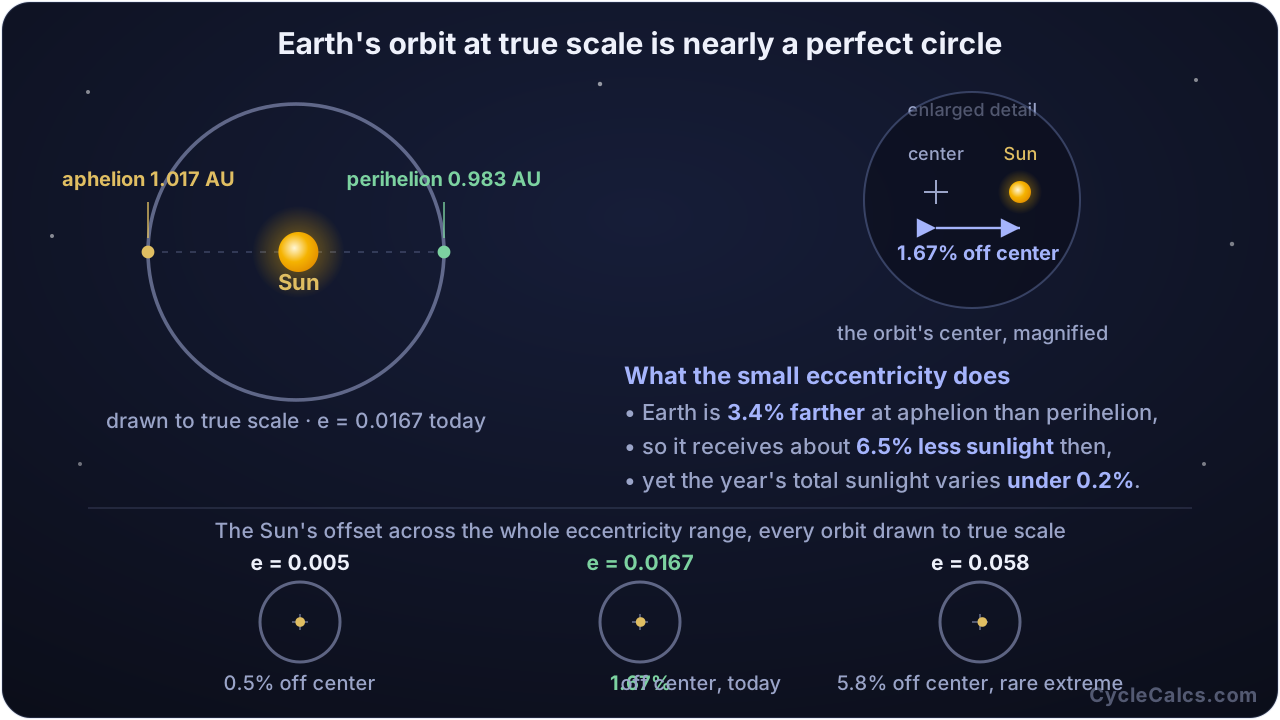
Eccentricity is how stretched the orbit is. It breathes between nearly circular (about 0.005) and mildly oval over roughly 100,000 years, with a steadier 405,000-year beat underneath; the interactive shows a typical swing up to about 0.05, while the full long-term orbital solution (Laskar 2004) reaches a rarer extreme near 0.058. Today it is about 0.0167 and slowly falling.
Eccentricity is the only one of the three that changes the total sunlight Earth receives in a year, and even then by only a fraction of a percent. Its real importance is that it sets how strongly the next motion, precession, can act.
Axial tilt, or obliquity, is the angle of Earth's spin axis away from straight up. It rocks between about 22.1 and 24.5 degrees every 41,000 years and is now about 23.44 degrees and falling. More tilt means stronger seasons everywhere, and especially at the poles: a steeper axis pours more summer sunlight onto the high latitudes and tips less onto them in winter.
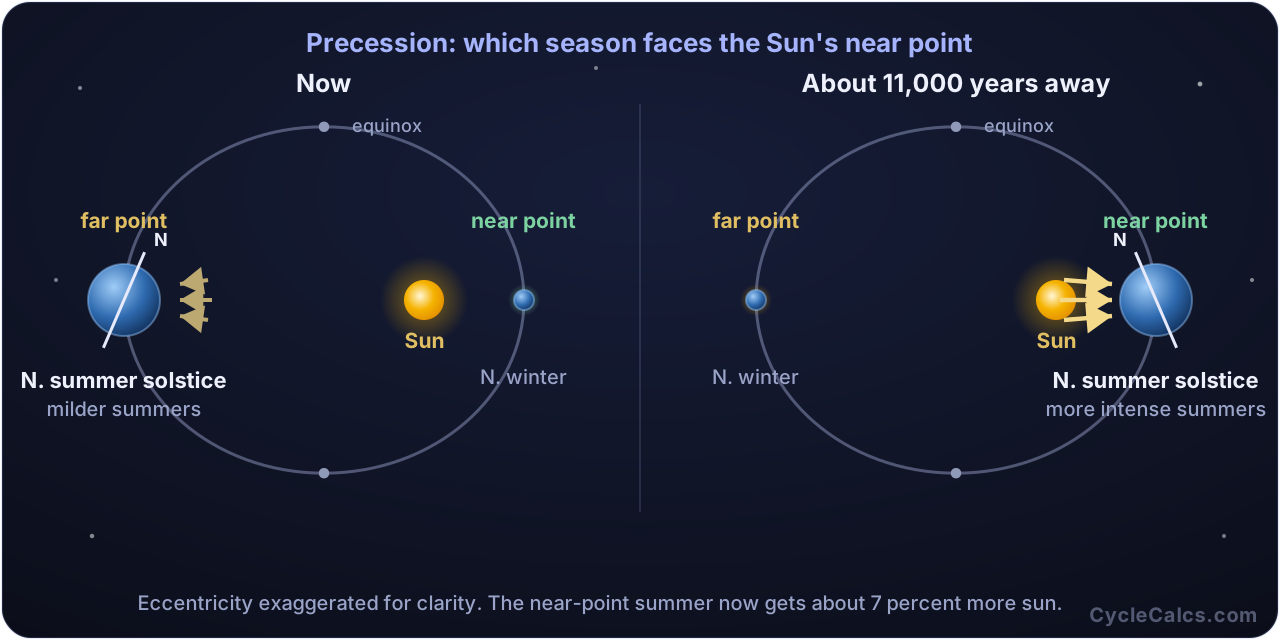
Precession is the slow wobble of the spin axis combined with the gradual turning of the orbit itself. Together they move the point in the orbit where each season happens. Right now northern midsummer falls near aphelion, the farthest point from the Sun, so northern summers are a touch milder; about 11,000 years either side of now, summer sits near the close point instead. This climatic precession runs on a roughly 19,000 to 23,000-year beat, and eccentricity decides how big its swing is.
How they pace the ice ages
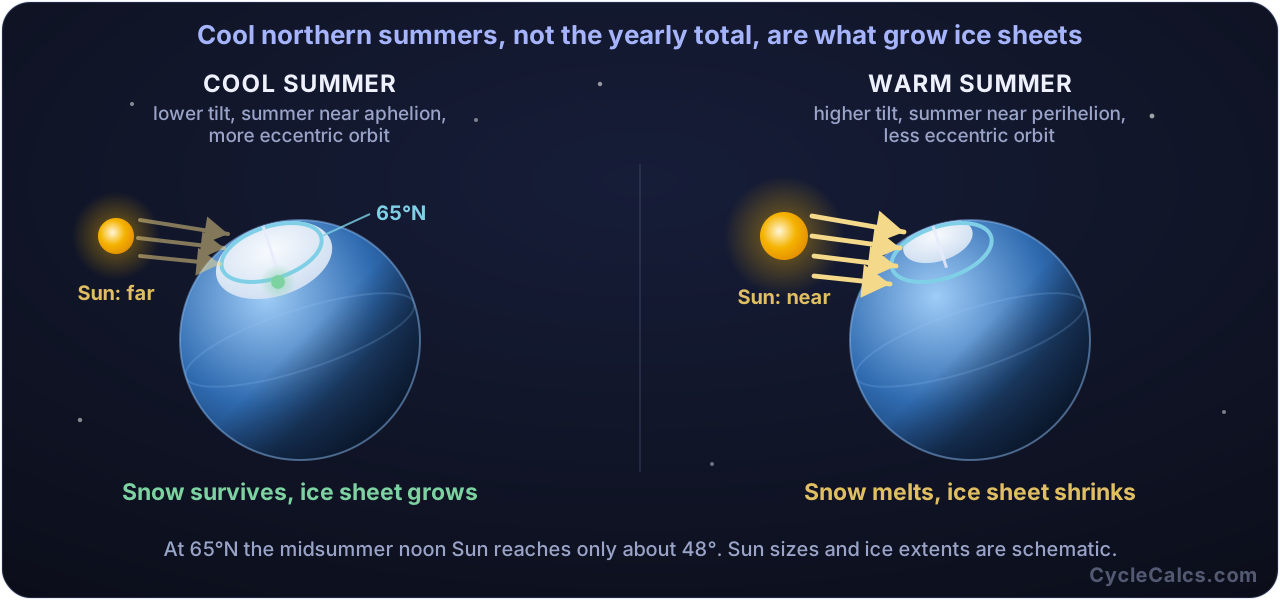
The Serbian scientist Milutin Milankovitch worked out the key idea in the 1920s and 1930s: what matters for growing an ice sheet is not the yearly total of sunlight but the summer sunlight at high northern latitudes, where the big northern landmasses sit.
If northern summers are cool, the previous winter's snow can survive the season and pile up year on year into ice. Low tilt, a precession that puts summer at aphelion, and an eccentricity large enough to deepen that effect all push northern summers cooler, and the ice advances; the opposite combination melts it back.
The geologic record bears this out. When scientists read the chemistry of deep-sea sediment cores and long ice cores, they find the very same beats, near 100,000, 41,000 and 23,000 years, written into the rise and fall of past ice ages. The landmark demonstration was a 1976 study by Hays, Imbrie and Shackleton titled "Variations in the Earth's Orbit: Pacemaker of the Ice Ages." This is the well-established astronomical theory of the Pleistocene glacial cycles.
Where we are now
At this moment eccentricity is about 0.0167 and falling, the axial tilt is about 23.44 degrees and falling, and northern summer falls near aphelion. Taken together, high-latitude summer sunlight is in a long, gentle stretch with no large swing due for many thousands of years, part of why the present warm interglacial has been so steady.
You can see this longest family of orbital cycles listed beside all the others on the Astronomical Cycles page, and the related axial wobble on its own, a longer cycle of about 25,800 years, on the precession page. (That bare axial wobble is slower than the 19,000 to 23,000-year climatic precession described here, which also folds in the slow turning of the orbit itself.)
What this does and does not tell us
These cycles work over tens of thousands of years. They explain the slow rhythm on which past glacial and interglacial periods have come and gone, and that long, deep-time rhythm is the whole of what this page is about. They are not a forecast of climate over years, decades or centuries, which is shaped by entirely different and much faster factors. The interactive here is a simplified teaching model with the correct periods and present-day values; the precise orbital history comes from detailed astronomical solutions such as Laskar 2004.
Frequently asked questions
What are the Milankovitch cycles?
The Milankovitch cycles are three slow changes in Earth's orbit and spin that together pace the ice ages: the eccentricity, or shape, of the orbit (about 100,000 and 405,000 years), the tilt of Earth's axis between about 22.1 and 24.5 degrees (about 41,000 years), and the precession that sets which season falls nearest the Sun (about 19,000 to 23,000 years). They are named for the Serbian scientist Milutin Milankovitch.
Do the Milankovitch cycles cause ice ages?
They pace them. By changing how much summer sunlight reaches the high northern latitudes, where large ice sheets form, the cycles set the slow rhythm on which glacial and interglacial periods come and go. Cores of deep-sea sediment and polar ice show the same roughly 100,000, 41,000 and 23,000-year beats, which is the strongest evidence for the theory. They act over tens of thousands of years and are not a forecast of climate over years or centuries.
Where are we in the Milankovitch cycles now?
Earth's eccentricity is about 0.0167 and slowly falling, the axial tilt is about 23.44 degrees and slowly falling, and northern summer currently falls near aphelion, the farthest point from the Sun. Together these put high-latitude summer sunlight in a long, gentle phase, with no large swing for many thousands of years.
Sources & further reading
- NASA Science: Milankovitch (Orbital) Cycles and Their Role in Earth's Climate: NASA's overview of eccentricity, obliquity and precession and their link to the ice ages.
- NASA Earth Observatory: Milutin Milankovitch: a short biography of the scientist who worked out the theory.
- NOAA NCEI Paleoclimatology: Climate Forcing: the archive of orbital-variation and insolation data behind the cycles.
- Hays, Imbrie & Shackleton (1976), "Variations in the Earth's Orbit: Pacemaker of the Ice Ages," Science: the landmark deep-sea-core study that confirmed the theory.
See how these figures are computed on the methodology and sources page.
Keep exploring
Precession
The roughly 25,800-year wobble of Earth's axis on its own, the Great Year.
InteractiveSeasons & the Sun
How the axial tilt makes the solstices, equinoxes and the seasons.
InteractiveThe Galactic Year
The longest cycle of all: the Sun's 230-million-year orbit of the Milky Way.
ReferenceAstronomical Cycles
Every major cycle from a day to a galactic year, on one zoomable timeline.