Moon Phases
The Moon does not change shape. We just see its sunlit half from a different angle each night. Drag the slider or press Play: the orbit (left) and the Moon you would actually see (right) move together through one month.
What a phase actually is
The Moon makes no light of its own; it only reflects sunlight. Because the Sun is far away, it always lights up exactly one half of the Moon, the half that happens to face it, in the same way it lights one half of Earth to give us day and night. That lit half never changes. What changes is our viewing angle. As the Moon travels around Earth, roughly once a month, we see its sunlit half from the side, from behind, from in front, and from every angle in between. A phase is simply how much of that lit half is turned toward us. When the lit half faces away we see darkness, a new moon; when it faces us squarely we see a bright disk, a full moon; and at the angles between we see a slice that grows and shrinks. Nothing about the Moon is actually changing shape. We are just walking around the lamp and catching it lit from different sides.
Walking through the cycle
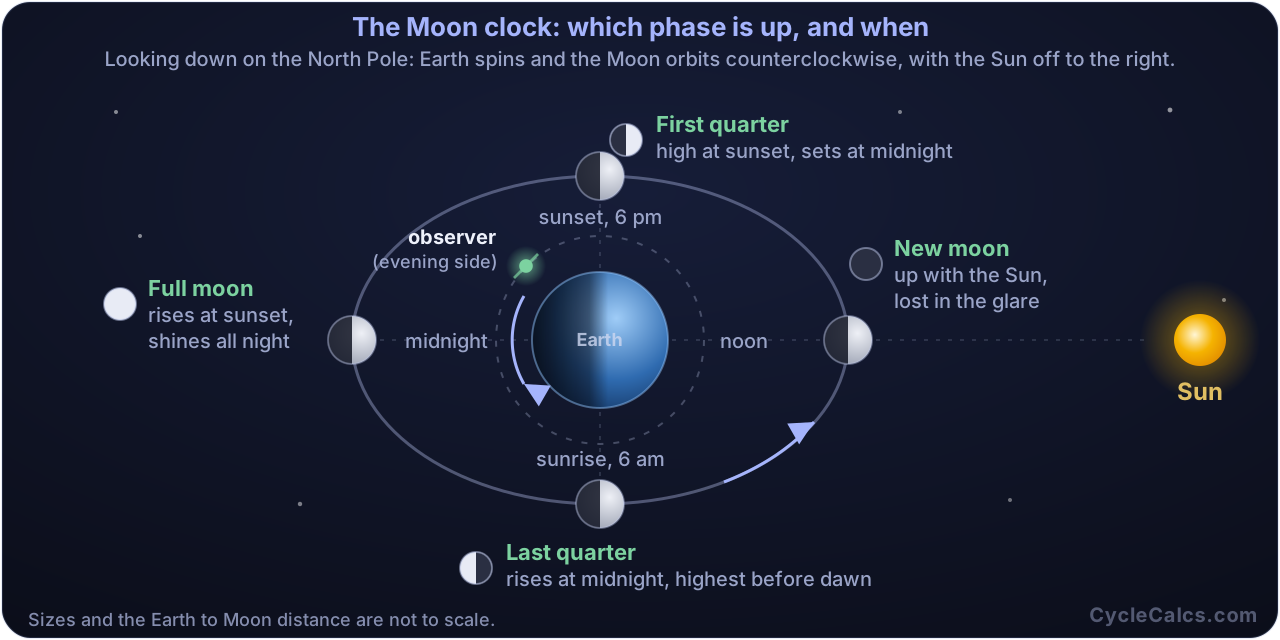
- New moon. The Moon sits roughly between Earth and the Sun, so its lit side points away from us. It rises and sets close to the Sun and is lost in the glare.
- First quarter. A quarter of the way around its orbit, we see exactly half the disk lit (the right half, from the Northern Hemisphere). It rides high in the evening sky.
- Full moon. The Moon is now opposite the Sun, so its entire sunlit face is turned toward us. It rises just as the Sun sets and shines all night.
- Last quarter. Three quarters around, the other half is lit, and the Moon is seen best in the morning sky before dawn.
Between these milestones the Moon is a crescent when less than half is lit, or gibbous when more than half is lit. While the lit fraction is growing, from new toward full, we say the Moon is waxing; while it shrinks, from full back toward new, it is waning. The sequence always runs in the same order, which is why a single glance at the Moon's shape tells you roughly where you are in the month.
Why the cycle runs 29.5 days, not 27.3
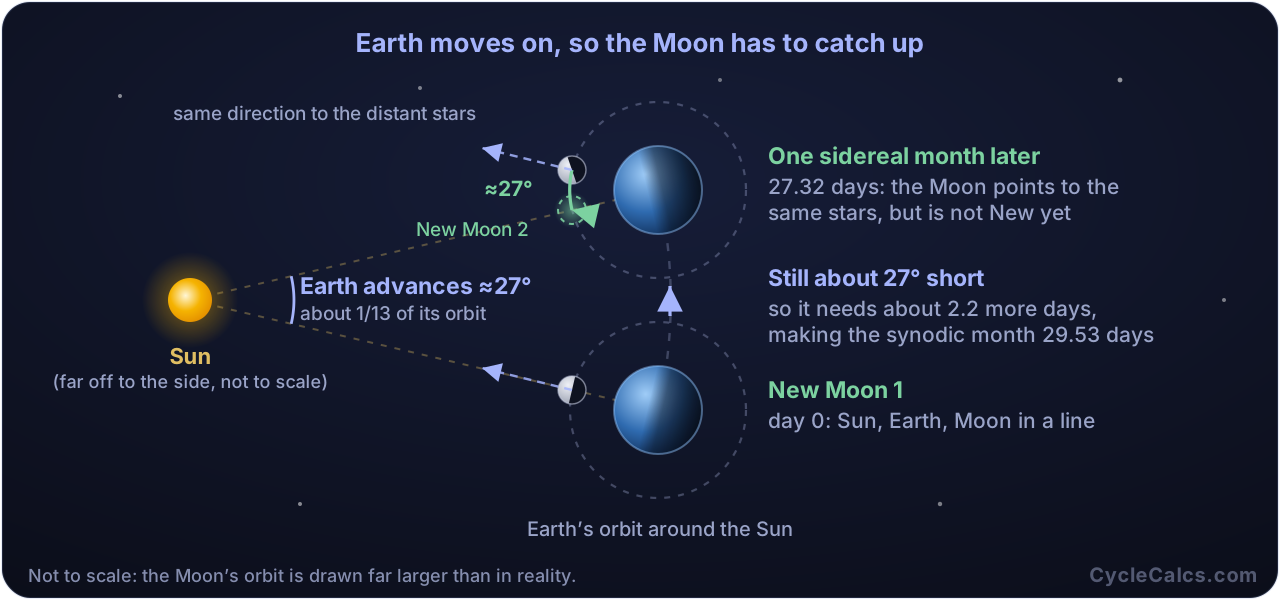
Here is a subtle and satisfying point. Measured against the background stars, the Moon completes one full loop around Earth in about 27.32 days, a span called the sidereal month. Yet the cycle of phases you actually live by, from one new moon to the next, runs almost two days longer, about 29.53 days, the synodic month. Why the gap? Because while the Moon spends those 27.3 days circling us, Earth itself carries on about one thirteenth of the way around the Sun. The Sun has shifted in our sky, so the Moon has to travel a little farther, for roughly two extra days, to line back up between us and the Sun for the next new moon. It is the same reason a runner chasing a moving finish line has to run a little past the old one to catch it. This catch-up beat is exactly what the Synodic-Period Calculator works out for any two bodies, and you can see the synodic and sidereal months side by side, among every other rhythm, on the cycles by length page.
A common mix-up: phases are not Earth's shadow
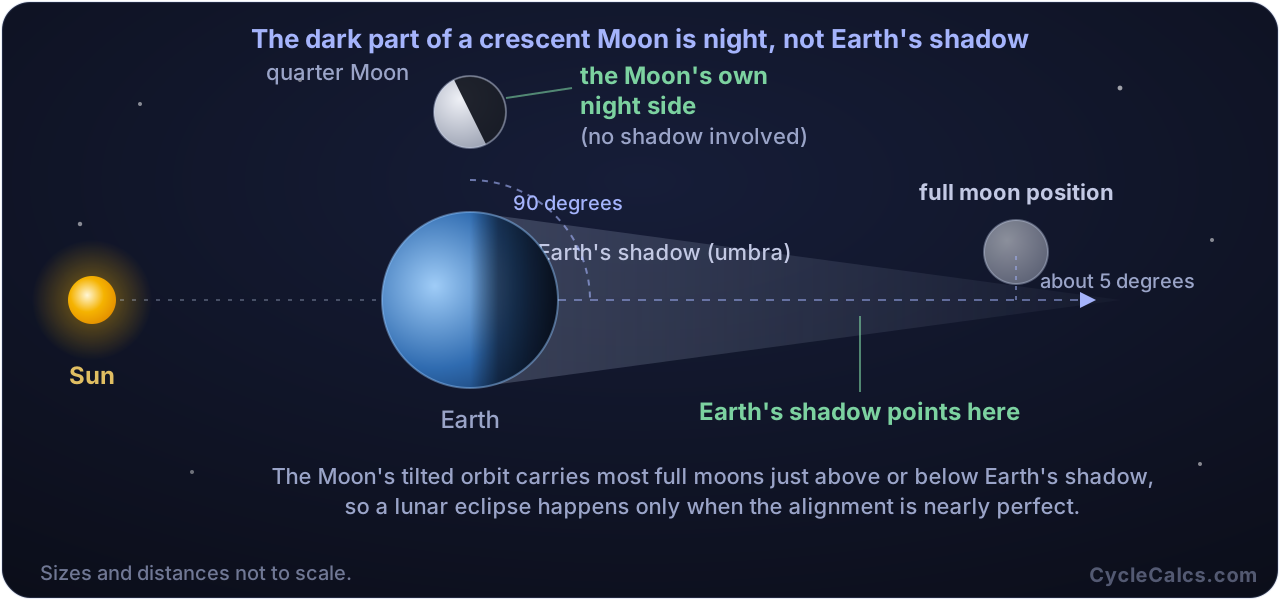
It is tempting to picture the dark part of the Moon as Earth's shadow falling across it, but that is not what we are seeing. The dark part is simply the portion of the Moon that, from our angle, is not lit, with no shadow involved at all. Earth's shadow does reach the Moon, but only on the rare occasions when the Sun, Earth, and Moon line up almost perfectly at full moon. That event is a lunar eclipse, a separate phenomenon and the next topic in this section.
Frequently asked questions
Why does the Moon have phases?
The Sun always lights one half of the Moon. As the Moon orbits Earth, we see that lit half from changing angles, so the sunlit portion facing us grows and shrinks. That changing shape is the phase.
How long is one cycle of Moon phases?
One full cycle from new moon to new moon is the synodic month, about 29.53 days. That is longer than the 27.32-day sidereal month, the time for one orbit against the stars, because Earth also moves around the Sun and the Moon must catch up to the same alignment.
Are Moon phases caused by Earth's shadow?
No. Phases come from the angle at which we view the Moon's sunlit half. Earth's shadow only falls on the Moon during a lunar eclipse, which can happen only at full moon and is a separate event.
Sources & further reading
- NASA Science: Moon Phases: NASA's overview of the eight phases and the roughly 29.5-day cycle.
- US Naval Observatory: Phases of the Moon and Percent Illuminated: the official reference on how the lit fraction changes through the month.
- NASA Space Place: What Are the Moon's Phases?: a plain-language explainer of why our view of the Moon changes.
- Jean Meeus, Astronomical Algorithms (Willmann-Bell): the standard reference for the synodic and sidereal month figures.
See how these figures are computed on the methodology and sources page.
Keep exploring
The Moon
Tonight’s phase and rise time, a 12-month phase calendar, and the Moon’s vital facts, on one page.
ReferenceCycles by length
See the synodic and sidereal months alongside every other astronomical cycle, shortest to longest.
InteractiveEclipses
Why eclipses come only at new and full moon, and only when the Moon is near a node.
InteractiveThe Tides
The same Sun-Moon angle that shapes the phases sets the tides: spring at new and full, neap at the quarters.
InteractiveTidal Locking & Libration
Why the Moon keeps one face toward us, and how its slow rock reveals about 59% of the surface. The far side is not the dark side.
SkyMoon Phase Calendar
Tonight's phase and a month grid of the new, quarter and full moons, with their traditional names.
ReferenceThe numbers and where we stand: the synodic month
The 29.530589-day mean lunation in every unit, where the current one stands, and the next new and full moons.