The Sun's Declination, Equinoxes & Solstices
Earth's axis is tilted 23.4°, so through the year the noon Sun climbs and sinks: it stands overhead anywhere from the Tropic of Cancer to the Tropic of Capricorn. Slide through the year and watch the declination curve (left) and the Earth-and-Sun geometry (right) move together.
The Wheel of the Year: solstices, equinoxes & the true cross-quarters
Working out this year's eight turning points...
Why a tilt makes seasons
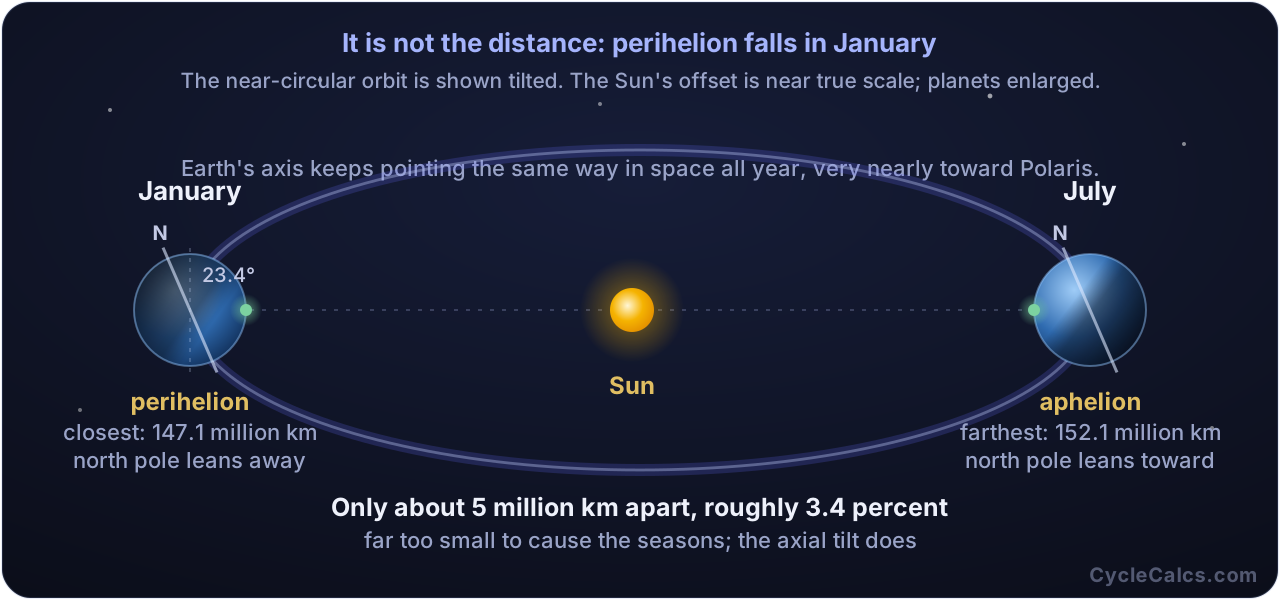
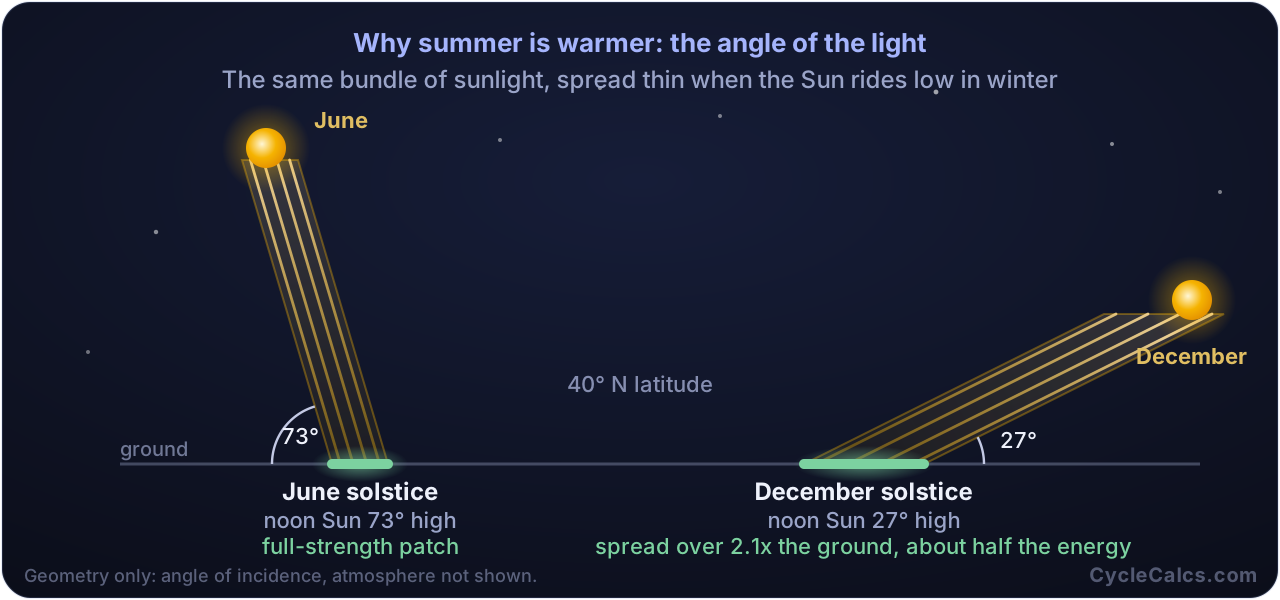
Earth's axis is tilted about 23.4 degrees, and it keeps pointing the same way in space all year, very nearly toward the star Polaris. As Earth travels around the Sun, that fixed tilt means each hemisphere leans toward the Sun for one half of the year and away from it for the other half. When your hemisphere leans toward the Sun, two things happen together: sunlight arrives more steeply, concentrating its warmth on less ground, and the Sun stays above the horizon longer, so the days are long. That is summer. Half a year later your hemisphere leans away, the sunlight strikes at a shallow, spread-out angle, and the days are short. That is winter. Notice what does not cause the seasons: our distance from the Sun. Earth actually comes closest to the Sun in early January, in the depth of northern winter. Seasons are about the angle of the sunlight and the length of the day, not how near the Sun we happen to be.
Declination: where the Sun stands overhead
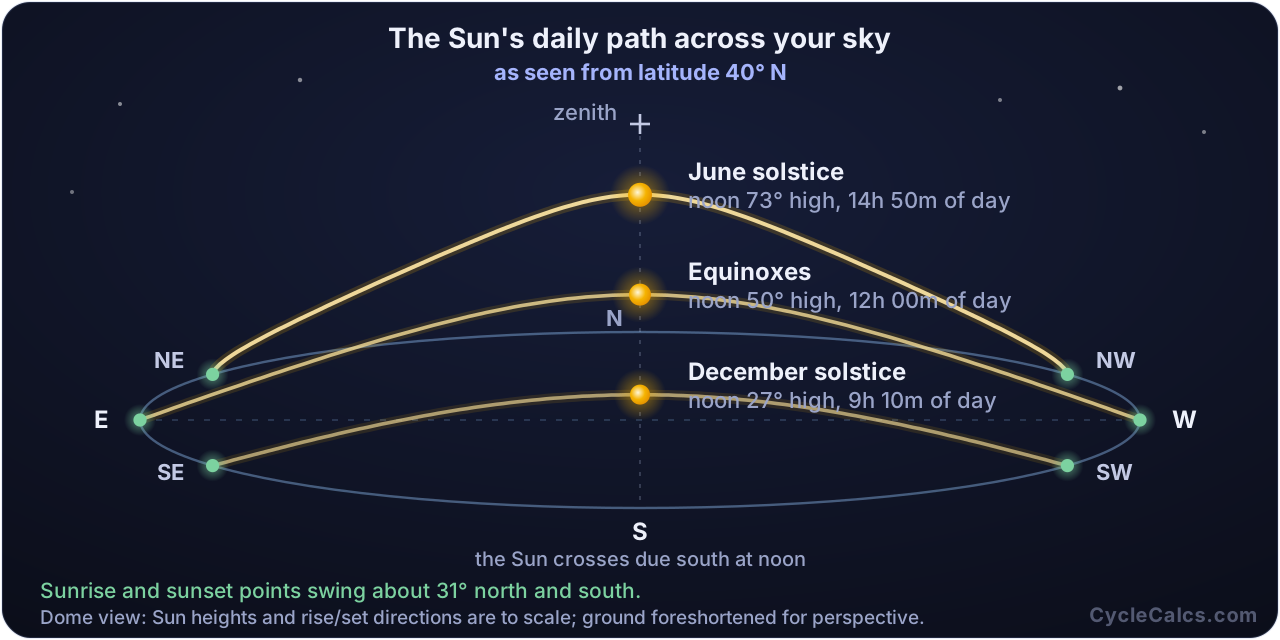
A neat way to capture all of this in a single number is the Sun's declination: its angle north or south of the celestial equator, which is Earth's own equator projected out onto the sky. For the Sun that angle has a tidy consequence, because it equals the latitude on Earth where the noon Sun stands directly overhead. Over a year it traces a smooth wave between the tropics:
- March equinox (declination 0°): the Sun is over the equator, and day and night are nearly equal everywhere.
- June solstice (+23.4°): the Sun is over the Tropic of Cancer, giving the north its longest day and the start of summer.
- September equinox (0°): the Sun is back over the equator.
- December solstice (−23.4°): the Sun is over the Tropic of Capricorn, giving the north its shortest day and the start of winter.
Those two extremes are no accident of naming. The Tropic of Cancer and the Tropic of Capricorn are drawn on our maps at exactly 23.4 degrees north and south because that is the farthest from the equator the noon Sun can ever stand overhead.
Why a solstice is the Sun "standing still"
The word solstice comes from the Latin sol, meaning Sun, and sistere, to stand still, and the declination curve above shows you why. The curve flattens out at its very top and very bottom. For a week or two around each solstice the noon Sun barely changes height, climbing to, or sinking to, almost exactly the same point day after day before it turns back. The Sun appears to pause, stand still, and then reverse. The equinoxes are the opposite case: there the curve is at its steepest, so the Sun's overhead point races across the equator at about four tenths of a degree of latitude per day, close to the Sun's own width in the sky, which is why daylight lengthens or shortens fastest around the equinoxes.
The full swing, from +23.4° to −23.4°, is exactly twice Earth's axial tilt. That same tilt is the one that slowly wheels around the sky over the 25,920-year cycle of precession, and it is this tilt, combined with the 5-degree tilt of the Moon's orbit, that drives the lunar standstills. You will find the tropical year and the seasons on the cycles by length page.
Frequently asked questions
What causes the seasons?
The seasons come from the 23.4-degree tilt of Earth's axis, not from Earth's distance from the Sun. As Earth orbits, each hemisphere leans toward the Sun for part of the year (its summer) and away for the other part (its winter).
What is the Sun's declination?
Declination is a body's angle north or south of the celestial equator, which is Earth's equator projected onto the sky. The Sun's declination equals the latitude where the noon Sun stands directly overhead: it swings from +23.4 degrees at the June solstice to -23.4 degrees at the December solstice, and is 0 degrees at the equinoxes.
What is the difference between an equinox and a solstice?
At an equinox the Sun is over the equator and day and night are nearly equal everywhere. At a solstice the Sun reaches its farthest declination, giving the longest or shortest day, and marks the start of summer or winter.
Sources & further reading
- NASA, Basics of Space Flight: Reference Systems: defines the celestial equator and declination as latitude projected onto the sky.
- US Naval Observatory, Earth's Seasons and Apsides: computed dates and times of the equinoxes, solstices, perihelion and aphelion.
- NASA Space Place, What Causes the Seasons?: how the 23.4-degree axial tilt, not distance from the Sun, makes the seasons.
- NOAA NESDIS, Why Does Earth Have Seasons?: the tilt and the direct-versus-shallow angle of sunlight through the year.
- Jean Meeus, Astronomical Algorithms (Willmann-Bell): the standard reference for computing solar declination and the equinox and solstice instants.
See how these figures are computed on the methodology and sources page.
Keep exploring
The Sun
Today’s sun times for your location and every equinox and solstice for the next two years.
InteractiveMoon Phases
The Sun lights the Moon the same way it lights Earth; see the monthly cycle.
InteractivePrecession of the Equinoxes
The slow 25,920-year wobble of the very axis that tilts the seasons.
InteractiveThe Sunspot Cycle
The Sun's own rhythm: its activity rising and falling every 11 years.
InteractiveThe Equation of Time
This same declination is the up-and-down axis of the Sun's figure-eight analemma.
SkySunrise & Sunset
Put the tilt to work: sunrise, sunset and day length for your own location, any date.